
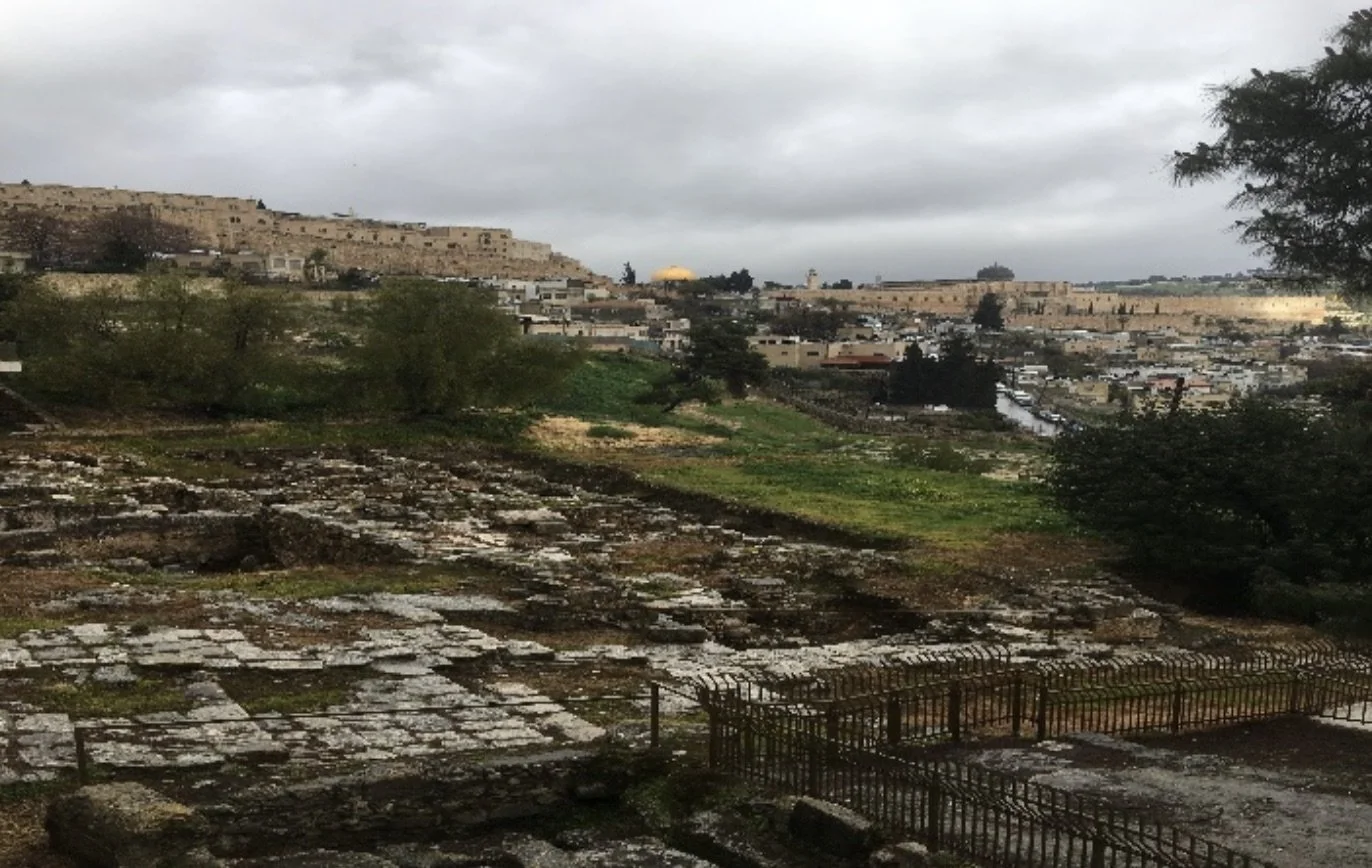
Fr John Deehan, one time lecturer in Scripture at Allen Hall Seminary in London, addressed this topic at a study day at Gidea Park on 4th July 2026. Fr John spoke of his love for the land, which arose when he spent a year there after completing studies at the Biblical Institute.
The Hebrew Scriptures in fact tell of ‘a land acquired, a land lost, a land restored, but never possessed’. Should anyone therefore say ‘the Lord gave us the land, and we are taking it back’?
The foundation story of Israel tells of settling in the land after the exodus from Egypt, but the northern part was lost to Assyria about 722 BC, and the land of Judah destroyed by Babylon about 587 BC. Seventy years of exile followed. There were Jews who returned to the land but they never controlled it.
Texts from the Scriptures put it all in context. Leviticus 25:23 is clear, when God says: ‘The land belongs to me, and you are only strangers and guests.’ The book of Deuteronomy teaches that the people are given the land not because of their own righteousness, ‘for you are an obstinate people’. (9:6) For the prophet Zechariah the land is for all nations, to be shared: ‘On that day many nations will join the Lord. They shall become his people and they shall live among you.’ (2:15) Fr John concluded that the land is to be a place of justice, mercy and compassion, where all are welcome. A Sufi guest, Rosina Iqbal, read a poem she had written: it resonated deeply with the talk.
(This will be found at the start of part 2, with an introduction from Fr Britto Belevendran.)